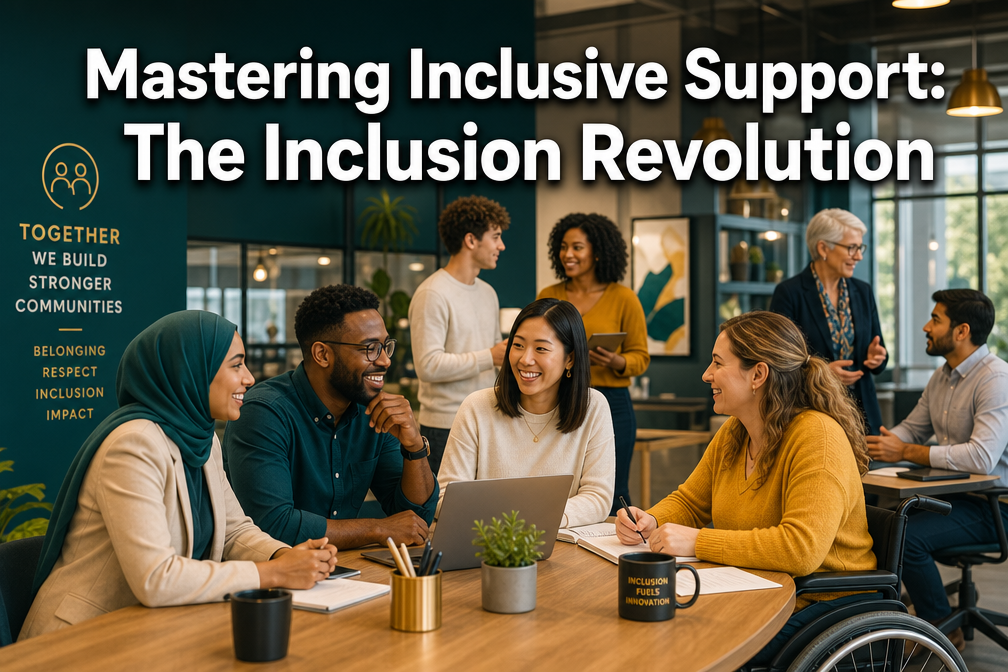
A 2026 workplace study found that 70% of neurodivergent professionals hide their conditions at work due to fear of stigma. This is the systemic failure that Mastering Inclusive Support (MIS) was built to dismantle. Rooted in Nancy Mungai’s upcoming book The Inclusion Revolution: Culture Change, Soul-Led Leadership & a Future Where Everyone Belongs, this 10-module training program equips leaders to build neuro-affirming environments where dignity and execution converge. The movement is anchored in #InclusiveLeadership #Neurodiversity #Inclusion #DEI #Belonging #WorkplaceCulture #SoulLedLeadership.
Key Takeaways
- MIS is a structured 10-module plus Manifesto program moving learners from self-awareness to systemic change.
- The curriculum covers invisible disabilities, unconscious bias, trauma-informed practices, and intersectional design.
- Graduates join the INVA Ecosystem as Soul-Led Inclusion Leaders committed to collective transformation.
- The program combines video lessons, reflection prompts, downloadable templates, and peer discussions across approximately 20 to 25 hours of self-paced study.
Course Structure: From Inner Work to Systemic Change
The program follows a four-part journey designed for execution, not just awareness.
Part I, The Inner Work: Self-Awareness and #InclusiveLeadership #Neurodiversity #Inclusion #DEI #Belonging #WorkplaceCulture #SoulLedLeadership
Modules 1 through 3 build foundational understanding. Learners explore neurodivergence definitions, confront personal biases, and develop emotional intelligence through shadow work and self-compassion practices. This section establishes the mindset required before any structural change can hold.
Research shows that inclusive communication training improves workplace behavior by equipping professionals with active listening and empathy skills. The MIS program operationalizes this by embedding reflection journal prompts and soul quotes into every module.
Part II, The Relational Work: Building Psychological Safety
Modules 4 through 6 move into practical application. Topics include the art of inclusion, trauma-informed practices, and neuro-affirming collaboration. Learners engage with real-life scenarios through case studies and a Scenario Lab that tests inclusive problem-solving under pressure.
Courses on neurodiversity in workplaces emphasize evaluating leadership models to identify barriers for neurodivergent employees. MIS addresses this by teaching learners to design flexible systems and accessible tools that foster collaborative environments.
Part III, The Systemic Work: Redesigning Culture and #Belonging #WorkplaceCulture
Modules 7 and 8 tackle structural transformation. Learners study global disability rights, reasonable accommodations, confidentiality ethics, and intersectionality in neurodivergence. The output is an inclusive policy template ready for implementation.
Inclusive design training programs demonstrate that accessible communication and barrier-free service workflows are essential for building empathetic organizations. MIS integrates this principle into its policy redesign framework.
Part IV, The Movement: Legacy and #SoulLedLeadership
The final section challenges learners to become Soul-Led Inclusion Leaders. Module 9 focuses on courageous conversations, mentorship, and allyship. Module 10 reveals the INVA Ecosystem and how graduates join a global community. The program closes with a Manifesto for the Future, a bold pledge to collective change.
Built-In Features Across the Course
Each module contains audio or video lessons, reflective journal prompts, practical tools and templates, peer discussion threads, and a microbadge on completion. The full program requires approximately 20 to 25 hours of self-paced study with an optional mentorship track.
Conclusion
Mastering Inclusive Support is not awareness training. It is execution infrastructure for cultural transformation. The next step is enrollment. Leaders who complete this program will graduate with the tools, templates, and community required to build workplaces where everyone belongs. Explore inclusive training options and join the INVA movement to begin. For foundational context, review the resources on neurodiversity awareness and how celebrating inclusion drives workplace success. Learn more about inclusive neurodivergent virtual assistants and embracing neurodiversity in the workplace. Browse available courses to get started.
Frequently Asked Questions
1. Who is the Mastering Inclusive Support (MIS) course designed for?
Mastering Inclusive Support is designed for leaders, managers, HR professionals, educators, coaches, entrepreneurs, disability advocates, and anyone committed to building workplaces and communities where neurodivergent and disabled individuals can thrive. Whether you lead a business, support clients, or influence organizational culture, the course provides practical tools for creating more inclusive and psychologically safe environments.
2. What will I learn in the Mastering Inclusive Support course?
The course takes learners through four stages of transformation: personal awareness, relational leadership, systemic redesign, and movement building. Participants learn about invisible disabilities, unconscious bias, trauma-informed practice, psychological safety, accessibility, inclusive communication, policy development, intersectionality, and neuro-affirming leadership while applying these concepts through practical tools, templates, and reflection exercises.
3. How is Mastering Inclusive Support different from traditional diversity and inclusion training?
Many diversity and inclusion programs focus primarily on awareness. Mastering Inclusive Support emphasizes implementation. Rather than simply discussing inclusion, the course equips participants to redesign systems, improve leadership practices, create accessible workplaces, and build lasting organizational change through practical frameworks and real-world application.
4. Why does INVA focus specifically on neuroinclusive leadership?
INVA believes inclusion is most effective when it begins with people whose needs have historically been overlooked. By helping leaders understand neurodiversity, invisible disabilities, executive functioning differences, and psychological safety, organizations become better equipped to support every employee, client, and community member—not just neurodivergent individuals.
5. What practical resources are included in the course?
Mastering Inclusive Support includes video and audio lessons, reflective journal prompts, practical templates, implementation guides, scenario-based exercises, peer discussion opportunities, downloadable resources, and microbadges throughout the learning journey. Learners finish with actionable tools they can immediately apply within their organizations.
6. What kinds of organizations can benefit from Mastering Inclusive Support?
The principles taught in MIS can be applied across businesses, nonprofits, schools, healthcare organizations, government institutions, community organizations, and social enterprises. Any organization seeking to improve workplace culture, accessibility, employee wellbeing, leadership effectiveness, or inclusive service delivery can benefit from the framework.
7. How does Mastering Inclusive Support help build psychologically safe workplaces?
The course teaches leaders how to foster trust, improve communication, reduce stigma, recognize unconscious bias, respond with empathy, and design environments where people feel safe to contribute without fear of judgment. These practices strengthen collaboration, innovation, employee wellbeing, and long-term organizational performance.
8. What makes the Mastering Inclusive Support framework unique?
Mastering Inclusive Support combines inner transformation with organizational transformation. Instead of treating inclusion as a compliance exercise, the framework guides learners through personal growth, relationship building, systems redesign, and community leadership. This holistic approach helps create lasting cultural change rather than temporary awareness.
9. How does Mastering Inclusive Support connect with the wider INVA ecosystem?
Mastering Inclusive Support serves as the foundation of INVA’s inclusive practice model. Graduates become part of a growing ecosystem of practitioners, leaders, and advocates committed to advancing neuroinclusive workplaces, supporting diverse communities, and applying inclusive leadership principles through the INVA Network.
10. Is Mastering Inclusive Support only for people working in disability or neurodiversity?
No. While the course centers neurodiversity and invisible disabilities, its principles apply to anyone leading people, designing services, developing policies, or shaping organizational culture. The skills learned—including inclusive communication, systems thinking, trauma-informed leadership, and accessible design—benefit teams and communities across every sector.
References
[1] Inclusive Communication And Behavior In Workplace – https://www.riseupp.com/course/coursera-instructor-network/inclusive-communication-and-behavior-in-workplace?utm_source=openai
[2] Neurodiversity In Workplaces Inclusive Leadership – https://www.coursera.org/learn/neurodiversity-in-workplaces-inclusive-leadership?utm_source=openai
[3] Accessibility In Customer Support Inclusive Design Training Course – https://www.datastatresearch.org/courses/accessibility-in-customer-support-inclusive-design-training-course?utm_source=openai