Seventy-nine percent of neurodivergent leaders report burnout or workload-management challenges as they grow their ventures. Not because they lack ideas. Not because they lack ambition. Because the systems around them were never built with their brains in mind.
That number stopped me. It reframed a question I had been sitting with after watching Heartland, a Canadian television series set on a family horse ranch. Even if you have never seen the show, the image it surfaces is worth holding: a horse with remarkable strength and speed, whose ability to perform depends not on its raw power, but on its environment, its relationship with its rider, and the quality of guidance it receives.
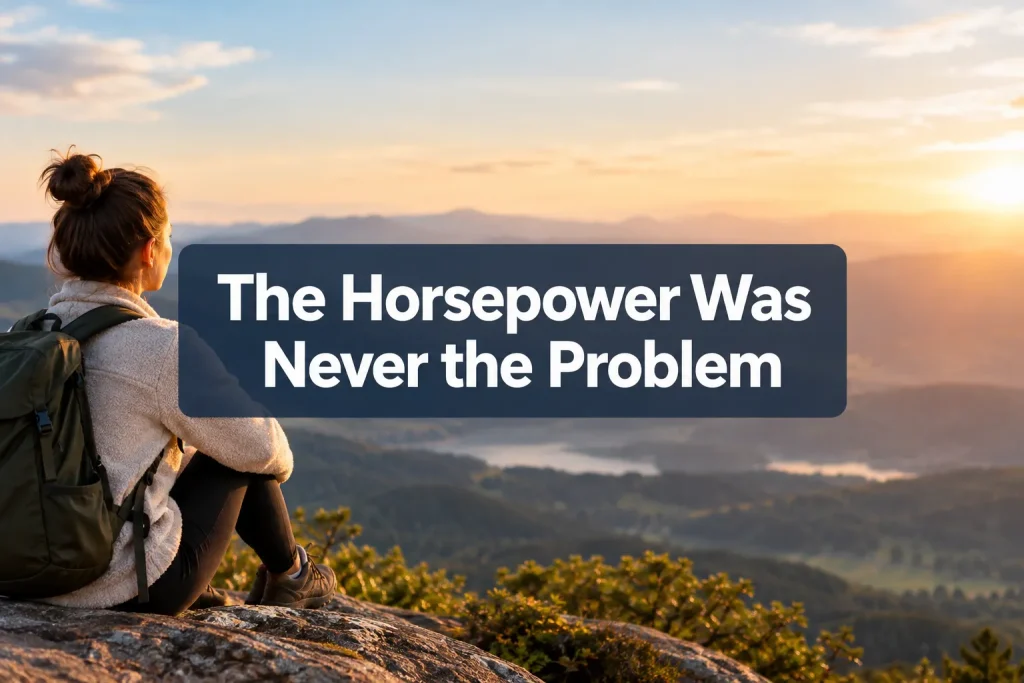
The horse is not the problem. The conditions are.
That is precisely what ADHD, neurodiversity, and the growing conversation around neuroinclusive systems are teaching us about founder support in 2026. The capacity is present. The gap is structural.
Key Takeaways
- Neurodivergent founders face systemic barriers to execution, not deficits in capability or ambition.
- Sixty-one percent of neurodivergent entrepreneurs have avoided starting or scaling a business due to structural barriers, not a lack of ideas.
- The right support reduces cognitive load and externalises planning, freeing founders to focus on strategy and decisions.
- Neuroinclusive systems must be designed around the person, not the other way around.
- AI-augmented executive support and structured operations partnerships are among the most effective tools available to neurodivergent founders today.
The Horse Is Not the Problem
A powerful horse with exceptional energy does not underperform because of its strength. It underperforms when the environment, the guidance, or the relationship with its rider is misaligned.
This is the frame that clarifies so much about ADHD and neurodivergent entrepreneurship.
Some founders with ADHD experience rapid idea generation, intense curiosity, deep creative focus, and the ability to make unexpected connections at speed. These are genuine strengths. They are also the same traits that can make administrative sequencing, task initiation, and consistent follow-through genuinely difficult.
The result is a founder who can hold a clear vision for their business and still struggle to send the email that moves it forward. Who knows exactly what needs to happen and still finds starting the task difficult. Who builds an exciting strategy, then feels overwhelmed by the dozens of smaller actions required to execute it.
From the outside, that gap can look like poor discipline. It is not. It is the absence of the right structure.
“The problem is not the capacity. The problem is the conditions.”
Explore more about ADHD and neurodivergent entrepreneurship to understand the full picture.
What Neurodivergent Founders Actually Need
Research from 2026 identifies four support needs that are most critical and least commonly met for neurodivergent entrepreneurs:
| Support Need | What It Looks Like in Practice |
|---|---|
| Peer community | Connection with others who share lived experience of neurodivergence |
| Contextual mentoring | Guidance from neurodivergent founders who understand the specific challenges |
| Executive function support | Business support that explicitly addresses executive-function demands rather than assuming neurotypical capacity |
| Assistive systems | Tools and workflows that externalise administrative load so founders can focus on strategy |
The pattern is consistent. The problem is not effort. It is the absence of scaffolding.
Seventy-nine percent of neurodivergent founders say it is important that support comes from someone with lived experience of neurodivergence. That is not a preference. That is a design requirement.
Learn how neuroinclusive virtual assistant support is built around these realities.
ADHD and Neurodiversity Demand Neuroinclusive Systems, Not More Effort
Here is the operational truth: we cannot ask neurodivergent founders to adapt endlessly to systems that were not built for them and then measure their performance against those same systems.
Consider a founder who begins Monday with fifteen ideas, three urgent client requests, several unfinished projects, and a calendar full of meetings. They know their priorities. They understand their responsibilities. They may even have a task management system.
Yet by the end of the day, they have spent so much energy switching between tasks, managing interruptions, and trying to hold everything in memory that meaningful progress feels almost impossible.
The solution is not another productivity technique. The solution is a system that reduces cognitive load.
That means:
- Capturing tasks before they are forgotten
- Making priorities visible and sequenced
- Maintaining workflows that do not require constant re-explanation
- Building accountability structures that feel supportive rather than punitive
- Using AI-augmented executive support to handle repetitive administrative work
AI tools are now recognised as significant cognitive-load supports for neurodivergent professionals. When founders can delegate drafting, scheduling, and information organisation to structured systems and capable operations partners, they redirect that recovered energy toward decisions and strategy. That is not accommodation. That is intelligent operations design.
Executive Support for Neurodivergent Founders: What Works
Effective founder support in a neuroinclusive context is not about managing someone. It is about building the operational infrastructure around them.
What effective executive support looks like:
- Externalised planning: Decisions are documented. Projects are broken into sequenced steps. Nothing critical lives only in someone’s head.
- Predictable workflows: Recurring processes are standardised so founders do not have to reconstruct the same systems repeatedly.
- Structured accountability: Regular check-ins that track progress and surface blockers before they become crises.
- Reduced decision fatigue: Routine choices are handled within agreed frameworks, preserving cognitive energy for high-value work.
- Calm, consistent communication: Updates are clear, structured, and delivered in formats the founder can actually use.
This is the model behind INVA’s role-based support services, which align operational assistance to specific business functions rather than offering a generic task list.
The distinction matters. A task assistant waits to be told what to do. An operations partner maintains the system so the founder does not have to manage the managing.
The Wrong Support Creates More Work
There is an important limitation here. Support does not automatically reduce friction. Poorly designed support can introduce more meetings, more messages, more systems, and more decisions for a founder to navigate.
A founder who hires help only to spend more time explaining, correcting, and chasing updates has not gained capacity. They have added a responsibility.
This is why the design of support matters as much as its presence.
Effective neuroinclusive operations support requires:
- Clear ownership of tasks and outcomes
- Agreed communication standards
- Systems that are maintained consistently without requiring constant founder input
- An operations partner who understands executive dysfunction and builds around it
At INVA, practitioners function as AI-augmented operations partners, not task-doers waiting for instructions. The system prevents chaos rather than reacting to it. That is the structural difference.
Building Systems Around the Person: The Neuroinclusive Standard
The 2026 landscape is shifting. Neurodivergent-affirming business systems are becoming a distinct operational category. Founders are building tools, communities, and accelerators explicitly designed to match systems to the brain rather than force neurodivergent entrepreneurs into rigid structures that increase friction.
Structured accelerators for ADHD founders now provide weekly accountability, milestone frameworks, and peer support designed to harness hyperfocus and creativity while supplying the external scaffolding that many neurodivergent founders cannot sustain alone. Local ecosystems in cities like Toronto are recommending visual tools such as Trello, Asana, and Notion alongside mentorship programs to help ADHD founders translate ideas into concrete steps.
The design principle is consistent across all of them: low cognitive load, predictable structure, and support that feels good to use rather than punishing to navigate.
For a neurodivergent founder, the right combination might include:
- A central system to capture and prioritise ideas
- An operations partner who maintains workflows without requiring daily oversight
- AI automation for repetitive tasks
- Structured reflection time built into the weekly rhythm
- Accountability that tracks momentum, not just activity
Explore general support services designed to reduce operational friction for founders managing fluctuating capacity.
Conclusion
The potential was never the whole story.
A founder can have meaningful ambitions, valuable ideas, and considerable capability while still needing structured support with the practical work of bringing those ideas to life. That does not diminish their capacity. It confirms that environment and systems are not peripheral to performance. They are central to it.
Sixty-one percent of neurodivergent entrepreneurs have avoided starting or scaling a business because of systemic barriers. Not a lack of ambition. Systemic barriers. That is a solvable problem.
The next step is not asking neurodivergent founders to work harder. It is building operational infrastructure that works with how they think.
Here is the plan:
- Identify the tasks that consume the most cognitive energy without producing the highest-value outcomes.
- Determine which of those tasks can be externalised to a structured operations partner or automated through AI-augmented workflows.
- Build a communication and accountability system that maintains momentum without adding management overhead.
- Review the structure quarterly and adjust as capacity and business needs evolve.
If you are a neurodivergent founder, coach, or professional, consider what part of your work would move faster if you no longer had to manage it entirely on your own. The answer to that question is where the right support begins.
Review INVA’s neuroinclusive support pricing to find the structure that fits your operational needs.
The horsepower was never the problem. The system around it was. Build a better system.