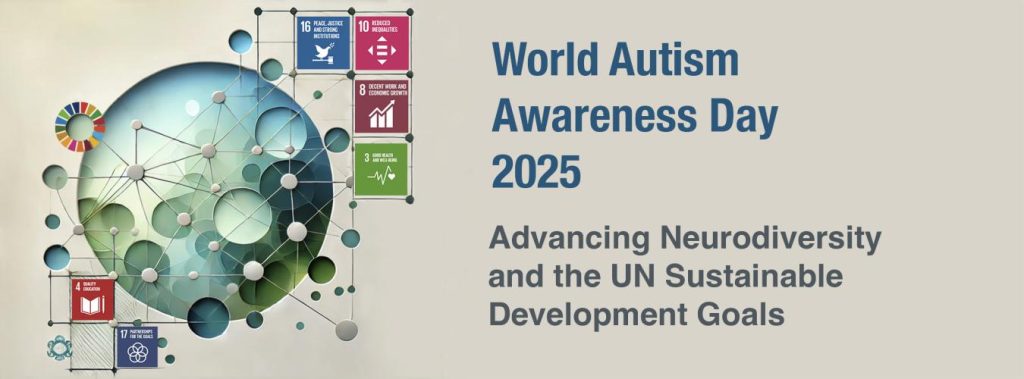
World Autism Awareness Day
World Autism Awareness Day, observed every year on April 2, is a global moment to recognize autistic individuals, celebrate neurodiversity, and reflect on how workplaces, schools, and communities can become more inclusive.
But awareness alone is not enough. The real question is this: are we creating environments where autistic individuals can thrive, not just exist?
Why This Day Matters
Autism is a natural variation in how the brain processes information, communicates, and experiences the world. Autistic professionals bring strengths that many organizations actively seek:
Strong pattern recognition
Deep focus and subject-matter expertise
Creative problem solving
Honesty and direct communication
Systems thinking
Yet many autistic individuals face barriers in hiring, workplace communication norms, and rigid performance expectations.
World Autism Awareness Day is an opportunity to move beyond symbolism and toward structural inclusion.
From Awareness to Acceptance to Action
Inclusion evolves in stages.
Awareness means recognizing autism exists.
Acceptance means valuing autistic differences.
Action means redesigning systems so autistic professionals can succeed.
Action might look like:
Flexible communication styles
Clear written instructions instead of ambiguous verbal requests
Predictable workflows and reduced sensory overload
Structured feedback and transparent expectations
These are not special favors. They are inclusive design principles that benefit entire teams.
What Inclusive Employers Do Differently
Inclusive employers understand that neurodiversity is a capability asset, not a compliance issue.
They:
Review hiring processes for bias
Offer alternative interview formats
Provide reasonable adjustments without stigma
Train managers on neurodiversity literacy
Focus on strengths-based performance models
If your organization is looking to embed these practices strategically, explore our neurodiversity training for companies
Autism and the Workplace
Autistic professionals often excel in environments that value:
Deep work over constant meetings
Clear systems over unwritten rules
Merit over social performance
When workplaces remove unnecessary barriers, productivity improves across the board.
For practical guidance on creating neuro-inclusive systems, see our resource on neurodiversity in the workplace
A Day for Reflection and Commitment
World Autism Awareness Day should not be reduced to a social media graphic or a temporary campaign. It is a reminder that inclusion requires ongoing structural change.
Ask yourself:
Are autistic employees safe to disclose?
Do managers understand sensory and communication differences?
Are policies flexible enough to accommodate diverse working styles?
If the answer is uncertain, this is where transformation begins.
Moving Forward
At INVA, we believe neurodiversity strengthens teams when workplaces are designed with intention.
Autistic professionals do not need to be “fixed.”
Work systems need to be improved.
World Autism Awareness Day is not just about awareness. It is about building environments where autistic individuals are respected, supported, and empowered to lead.
If your organization is ready to move from awareness to implementation, learn more about our inclusive workplace programs and training initiatives.
Inclusion is not a campaign. It is a commitment.
Frequently Asked Questions
What is World Autism Awareness Day?
World Autism Awareness Day is observed annually on April 2 to increase understanding of autism, celebrate autistic individuals, and encourage governments, employers, educators, and communities to create more inclusive environments. Today, many organizations also use the occasion to promote autism acceptance, accessibility, and meaningful inclusion.
Why is autism awareness important in the workplace?
Autism awareness helps organizations recognize that autistic professionals bring valuable strengths such as analytical thinking, attention to detail, systems thinking, creativity, and deep subject expertise. Understanding these strengths enables employers to build workplaces where autistic employees can contribute and succeed.
How can employers better support autistic employees?
Employers can support autistic employees by providing clear communication, predictable workflows, structured onboarding, flexible working arrangements where appropriate, written instructions, strengths-based management, and inclusive leadership practices that reduce unnecessary workplace barriers.
What workplace tools help support autistic professionals?
Many organizations use tools such as Google Workspace, Microsoft Teams, Slack, Notion, ClickUp, Asana, Trello, Zoom, and Microsoft 365 to improve communication and workflow management. For businesses looking to reduce complexity, INVA often recommends GoHighLevel because it centralizes communication, CRM, workflows, calendars, automation, and client management into one platform, helping teams create more structured and predictable work environments.
What is the difference between autism awareness, acceptance, and inclusion?
Awareness means recognizing that autism exists. Acceptance means respecting autistic individuals and valuing different ways of thinking. Inclusion goes further by designing workplaces, communication methods, leadership practices, and operational systems that enable autistic professionals to succeed without unnecessary barriers.
Do workplace adjustments for autistic employees benefit everyone?
Yes. Many workplace improvements designed for autistic employees, such as clearer communication, documented processes, structured meetings, and predictable workflows, improve collaboration, productivity, and well-being for the entire workforce.
How does INVA help organizations become more autism-inclusive?
INVA helps organizations move beyond awareness campaigns by implementing neuro-inclusive workplace practices, leadership development, operational workflow improvements, AI-augmented support systems, and practical inclusion strategies that enable autistic professionals and their colleagues to thrive together.
Which organizations benefit most from autism-inclusive workplace strategies?
Businesses of all sizes, nonprofits, educational institutions, healthcare organizations, government agencies, and remote-first companies benefit from creating autism-inclusive workplaces. Any organization seeking stronger employee engagement, innovation, and retention can gain value from adopting inclusive practices.
Can autism-inclusive workplaces improve business performance?
Yes. Organizations that embrace neurodiversity often benefit from increased innovation, stronger problem-solving, improved employee retention, broader talent attraction, and more effective collaboration. Inclusive workplaces create better outcomes for employees while strengthening long-term organizational performance.
What is the first step toward creating an autism-inclusive workplace?
Begin by reviewing your workplace through the perspective of an autistic employee. Evaluate recruitment processes, communication styles, meeting culture, sensory environments, management practices, and workflow design. From there, implement practical changes that reduce barriers and create an environment where every employee has the opportunity to succeed.